Things to Do in Zaragoza in June
June weather, activities, events & insider tips
Shoulder Season · Good Value
June Weather in Zaragoza
Long-run averages for June
86°F (30°C)
High Temp
61°F (16°C)
Low Temp
1.1 inches (28 mm)
Rainfall
46%
Humidity
5
Rainy Days
9
Sunny-Day UV
⚠ The cierzo wind rips through the Ebro valley without warning. Temperatures plummet fast. Gusts flip cafe umbrellas and send unsecured items flying. It hits hardest in spring and early summer. Locals track it obsessively, like coastal towns tracking storms. Pack your light jacket. Even on warm days.
⚠ Late June afternoons spike past 35°C (95°F) during heat waves. This far exceeds the monthly average. Carry water always. Plan indoor activities between 1 PM and 5 PM. Heatstroke is real. Visitors underestimate the dry heat. Low humidity hides how much you sweat. Do not make this mistake.
Is June Right for You?
Weigh the advantages and considerations before booking
Advantages
- + June sits in the gap between Zaragoza's rainy spring and the furnace of July and August. Average highs reach 30°C (86°F) with only 46 percent humidity, the kind of dry warmth that makes the city's terraza culture come alive without the coastal mugginess of Barcelona or Valencia. Rain averages just 28 mm (1.1 inches) across five days, usually in brief afternoon bursts that clear within the hour.
- + Daylight stretches past 9:45 PM around the solstice, giving you nearly fifteen usable hours and the sort of golden evening light that turns the Basílica del Pilar into a photographer's dream from the Puente de Piedra. Locals fill the river terraces with cold Garnacha until well past ten. The warm evenings make outdoor dining the default rather than the exception.
- + Zaragoza remains largely uncrowded even in early summer, and June is solidly shoulder season. You will not queue at the Aljafería Palace the way you would at the Alhambra, and tables at El Tubo's tapas bars are available most evenings without a reservation. This is a city of nearly 700,000 people that somehow still feels like it has room to breathe.
- + Aragonese summer produce peaks at Mercado Central around June, with Jiloca valley cherries, bundles of local asparagus, and the first stone fruits of the season piling up under the market's iron-and-glass canopy. Wine from the Cariñena and Campo de Borja denominations just south of the city, poured ice-cold on a warm evening, carries the dry mineral character of the steppe landscape that produced it. The food in Zaragoza in early summer reflects a region eating at its seasonal best.
Considerations
- − Afternoons hit hard. Temperatures sometimes push past 35°C (95°F) in late June, and the stone streets of the Casco Antiguo radiate stored heat back at you like an oven door left open. Between 2 PM and 5 PM the city essentially shuts down for siesta. If you are used to continuous sightseeing, the mid-afternoon dead zone will force you to rethink your schedule entirely.
- − The cierzo, Zaragoza's notorious northwest wind, channels down the Ebro valley without much warning and can drop temperatures 8-10°C (14-18°F) in under an hour. A warm evening on Plaza del Pilar can turn jacket-weather cold in the time it takes to finish a copa. It flips cafe umbrellas, sends paper menus scattering across the square, and makes outdoor dining unpleasant when it blows hard.
Best Activities in June
Top things to do during your visit
June strips Zaragoza down to its essentials: heat, light, and stone. Daytime highs push toward 30 degrees Celsius, and the Ebro River corridor funnels a dry wind called the cierzo that can gust through the old town without warning, rattling cafe awnings along Calle Alfonso and carrying the faint mineral scent of sun-baked sandstone off the walls of La Seo. Rainfall drops to barely an inch for the entire month, which means day after day of hard blue sky over the city's Mudejar towers. By mid-morning the plaza outside the Basilica del Pilar is already hot underfoot, the pale marble tiles radiating warmth through the soles of your shoes. Locals have long since shifted their rhythms: the streets empty between two and five in the afternoon, then refill as shadows lengthen and the evening paseo begins. Zaragoza in June belongs to the hours after sunset. Restaurants along the Tubo district, the city's dense knot of tapas bars wedged between Calle Estebanes and Calle Libertad, keep their kitchens running well past midnight. The clatter of small plates and the hiss of olive oil hitting hot iron are the soundtrack of a Tuesday night here just as much as a Saturday. Locals crowd the outdoor terraces on Plaza Santa Marta, where the stone of the Roman wall behind the tables still holds the day's warmth at ten in the evening. Anyone arriving with questions about Zaragoza's weather in June should expect reliable, dry heat. Nights cool to a comfortable 16 degrees, which makes sleeping with a window cracked open entirely pleasant and keeps the after-dinner walk along the riverbank enjoyable rather than an endurance test. The Ebro itself runs low and slow, its water catching copper light at dusk, and the public parks flanking its banks, Parque del Agua, fill with families and joggers once the worst of the afternoon heat breaks.

Wine Tasting and Tapas in the ancient Town of Zaragoza
foodThe old quarter of Zaragoza smells like garnacha and cured ham after dark, and this guided tasting walks you directly into that world. You move through centuries-old bodegas and tapas counters in the Tubo district, sampling Aragon's indigenous grape varieties alongside local charcuterie, manchego aged in caves south of the city, and small bites that change with what the kitchen pulled from the Mercado Central that morning. The guides are locals with opinions about which bars pour honestly and which pad their boards with imported product, and that candor is the difference between a tourist circuit and an evening that teaches you something.
This is the fastest way to decode the Tubo's labyrinth of tapas bars and learn which Aragonese wines belong in your glass.
Insider tip: Eat lightly before you go but do not skip lunch entirely. The portions are generous enough that an empty stomach and Aragon's high-altitude reds will put you on the floor by the fourth stop.
This month: June evenings stay light until nearly ten, so the walk between bars happens in golden hour rather than full dark, and most stops will have their outdoor terraces open.

Guided tour of the Bardenas Reales de Navarra by 4x4
adventureAn hour north of Zaragoza, the landscape cracks open into something that looks like it belongs on another continent. The Bardenas Reales is a semi-desert badlands of wind-carved clay towers, flat-topped mesas, and gullies stained ochre and rust, all of it silent except for the crunch of dry earth under tires and the occasional rasp of a short-toed eagle overhead. A 4x4 tour covers ground you could not reach on foot in a day, threading through the Pisquerra and Castildetierra formations where the eroded pinnacles throw long shadows across cracked mud flats. The smell is pure dry earth and wild rosemary clinging to the few sheltered ravines.
This is the Aragonese landscape at its most alien, a place that has doubled as a film set precisely because it looks nothing like anything else in Spain.
Insider tip: Bring a bandana or buff for your face. The unpaved tracks kick up fine clay dust that coats everything, and sunglasses alone will not keep it out of your eyes.
This month: June daytime temperatures in the Bardenas often exceed what Zaragoza itself records because there is zero shade on the open steppe. The 4x4 provides air conditioning between stops. But sun protection for exposed walking sections is non-negotiable.

Private custom tour with a local guide Zaragoza
guided_experienceA private guide in Zaragoza is worth the investment because the city's layers are not obvious from the surface. Roman walls sit beneath medieval foundations beneath Baroque facades, and without someone who knows where to look, you will walk past the exposed Roman theater on Calle San Jorge without understanding that the modern street grid above it still follows the original decumanus. These tours flex to your interests: food-focused visitors end up at the Mercado Central sniffing saffron and smoked paprika. Architecture obsessives get taken inside Mudejar churches where the geometric tilework catches the light through narrow lancet windows in patterns that shift as the sun moves. The guide adjusts the pace to the heat, which in June means shaded routes and strategic cafe stops.
Zaragoza rewards local knowledge disproportionately because its most notable details, Roman mosaics under glass floors, Moorish plasterwork behind church altars, are invisible without someone pointing at the right wall.
Insider tip: Ask your guide to include the Patio de la Infanta inside the Ibercaja headquarters. It is a Renaissance courtyard reassembled inside a bank building, free to enter, and almost no visitors know it exists.

Zaragoza Private Walking Tour with a Local
walking_tourThis walking tour covers the ground between the two cathedrals, La Seo and the Basilica del Pilar, which face each other across the Plaza del Pilar like theological rivals frozen in stone. The route threads through the old Jewish quarter, the Juderia, where the streets narrow to the width of a donkey cart and the plaster walls still hold iron rings where mezuzot once hung. Your guide contextualizes what you are seeing: why the Aljaferia Palace has horseshoe arches that predate the Alhambra, how Zaragoza's position on the Ebro made it a prize every empire wanted, and what the locals think about the pillar-kissing tradition inside the basilica. The cool of the church interiors provides genuine relief from June's outdoor heat, and the contrast between the dim, incense-scented naves and the blinding white light outside is part of the sensory rhythm of the walk.
Two cathedrals, a Moorish palace, a Roman forum, and a medieval Jewish quarter inside a single walkable loop: Zaragoza compresses more historical weight per square kilometer than cities three times its size.
Insider tip: Wear shoes with good grip. The marble floors inside La Seo become slick from the humidity differential between the cool interior and the hot street, and the Aljaferia's courtyard flagstones are polished smooth.

Midday Market Tour and Spanish Cooking Class
foodThe Mercado Central de Zaragoza is a steel-and-glass structure from 1903 that still operates as a working market, not a food hall for tourists. This tour starts there, walking the stalls where vendors sell fat white asparagus from Navarra, lamb from the Aragon highlands, and slabs of Teruel ham so dark they look almost purple. You touch the produce, smell the sharp brine of olive barrels, hear the vendors calling prices in rapid Aragonese-inflected Spanish, and then carry your haul to a nearby kitchen to cook it. The class teaches foundational Spanish technique: a proper tortilla with a runny center, pimientos de padron blistered in a smoking-hot pan, and a rice dish built on sofrito made from scratch. You eat what you cook at a shared table, and the conversation that happens over that meal, with other travelers and the instructor, is half the value.
Buying your own ingredients at a real market and then cooking them collapses the distance between tourist and local faster than any other single experience in the city.
Insider tip: The market is busiest and best-stocked on Saturday mornings. But the weekday sessions are quieter, and the vendors have more time to talk, show you how to pick a melon by sound, and slice samples of the cured meats.

Full-day Somontano Wine Excursion and Visit Alquezar
day_tripSomontano, the wine region an hour and a half northeast of Zaragoza, sits in the foothills of the Pyrenees where the landscape transitions from the flat Ebro valley into limestone gorges and terraced vineyards. The drive alone is worth the day: the road climbs out of the brown plains and into green, and the air through the car window shifts from the dry mineral smell of the lowlands to something cooler, with notes of pine resin and wild thyme. You visit working bodegas where winemakers are doing serious things with indigenous grapes like moristel and parraleta alongside international varietals that thrive in the altitude. The second half of the day lands you in Alquezar, a medieval village perched above the Rio Vero canyon, where sandstone houses with wooden balconies lean over a gorge so deep you can hear the echo of the river but cannot always see it. The church of Santa Maria la Mayor sits at the top, and the view from its cloister stretches across the canyon to pale limestone cliffs streaked with iron oxide.
Somontano is one of Spain's most underestimated wine regions, and pairing it with Alquezar, a village that would be famous anywhere else in Europe, makes for a day trip that outperforms most full vacations.
Insider tip: If you are at all interested in swimming, bring a towel and water shoes. The Rio Vero below Alquezar has natural pools accessible by a short trail from the village, and a dip in the cold, clear water after a morning of wine tasting is the best possible reset before the drive back.
This month: June is harvest-free in Somontano, so the bodegas are between the spring bottling and the autumn crush, which means staff have time to give unhurried tastings and walk you through the cellars rather than rushing between tasks.
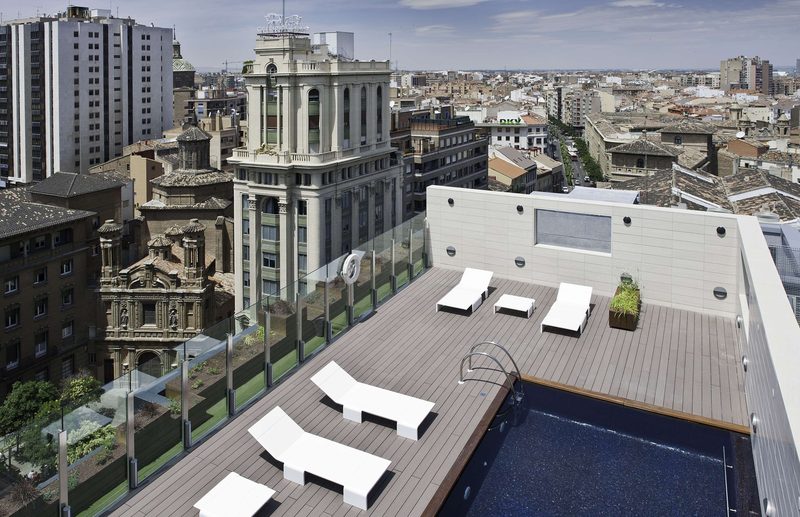
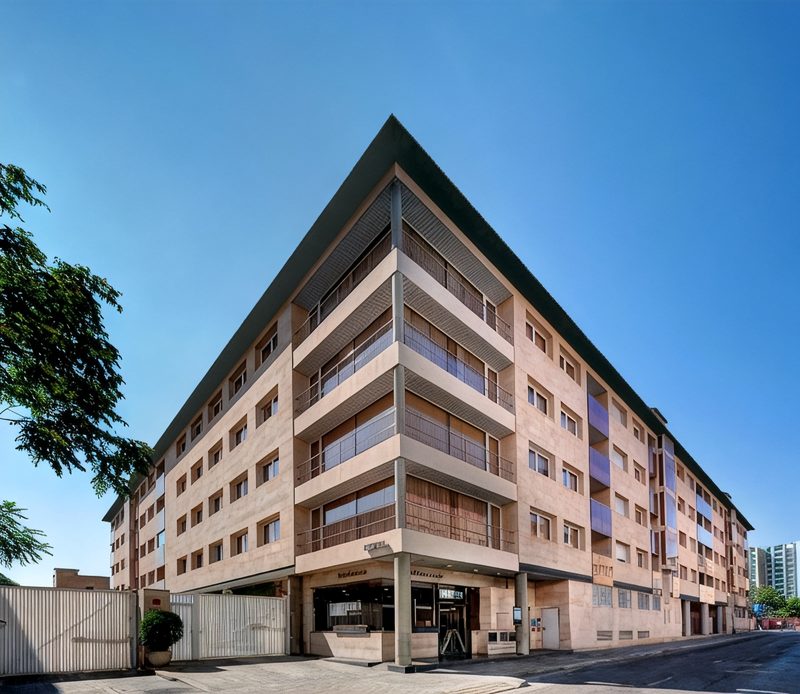
Where to Stay in Zaragoza in June
Hand-picked hotels across price tiers for June travellers.
Public Holidays in June
Dates that affect opening hours, transport and crowds
Día de La Rioja
Known in English as Day of La Rioja. A public holiday in these regions only: ES-RI.
Día de la Región de Murcia
Known in English as Day of Murcia. A public holiday in these regions only: ES-MC.
Sant Joan
Known in English as St. John's Day. A public holiday in these regions only: ES-CT, ES-VC.
Día de La Rioja
Known in English as Day of La Rioja. A public holiday in these regions only: ES-RI.
Día de la Región de Murcia
Known in English as Day of Murcia. A public holiday in these regions only: ES-MC.
Corpus Christi
A public holiday in these regions only: ES-CM.
Sant Joan
Known in English as St. John's Day. A public holiday in these regions only: ES-CT, ES-VC.
Packing Checklist
Bookmark this page — your progress is saved between visits
Need the full list with shopping links?
Climate-specific gear, brand recommendations, and what to leave at home.
View Zaragoza Packing List →Essential Tips
Insider knowledge and common pitfalls to avoid
Insider Knowledge
Zaragoza runs on a schedule that will confuse first-time visitors to Spain. Lunch is at 2 PM. Dinner is at 9:30 or 10 PM. The tapas bars in El Tubo do not come alive until after 8 PM. If you show up at a restaurant at 7 PM you will likely eat alone or find the kitchen closed entirely. Adjust your body clock on day one and the city makes sense. Fight it and you will spend the trip in tourist-facing places that exist precisely because visitors arrive at the wrong hour.
Base yourself in the Casco Antiguo, the old quarter around Plaza del Pilar. Everything worth seeing is walkable from here. El Tubo is two minutes on foot. The Ebro River promenade is a block north. The stretch along Paseo de la Independencia, the broad boulevard bisecting the centre, has more modern options and sits within a ten-minute walk of the same sights. Staying near the train station at Delicias makes sense only if you are passing through overnight.
Zaragoza is a safe city by any reasonable European standard, and walking the centre at night, even late at night, feels unremarkable. Petty pickpocketing is the only realistic concern. It is far less common here than in Barcelona or Madrid. The main caution is traffic: Zaragozanos drive with the confidence of people who know their city's streets well, and pedestrian crossings near the Coso and Gran Vían are less instructions than negotiations.
If you have access to a car, the wine country around Cariñena is only about 45 minutes (roughly 50 km or 31 miles) south and makes a superb half-day trip. The Garnacha grape is native to this part of Aragón. The small bodegas along the road offer tastings in settings that are the opposite of Napa or Rioja: no tour buses, no elaborate reservations, just a farmhouse and a barrel room. In June the vines are green and the dry landscape has an austere beauty that photographs well in the long evening light.
Avoid These Mistakes
Avoid trying to sightsee through the early afternoon. Between 2 PM and 5 PM in June, the sun sits nearly overhead and the stone plazas become heat traps that radiate warmth from every direction. The locals have spent centuries solving this problem by going indoors. Follow their lead. Use siesta hours for the Aljafería Palace interior, the Museo de Zaragoza, or CaixaForum, not for walking exposed routes between outdoor sites.
Do not treat Zaragoza as a day trip from Madrid or Barcelona. The AVE high-speed train makes it tempting to pop in for a few hours. But the city rewards two or three nights. The tapas culture only reveals itself in the evening. A Bardenas Reales excursion needs a full day. And the rhythm of the place, the late dinners, the long riverside evenings when the basilica domes catch the last light, cannot be felt in a six-hour stopover between trains.
Do not ignore the Mudéjar architecture. Most visitors beeline for the Basílica del Pilar, which is imposing but also the most obvious stop in the city. Zaragoza's real architectural distinction is its UNESCO-listed Mudéjar heritage: the brick tower of San Pablo, the geometric tilework inside La Seo, the decorative brickwork patterns on churches across the old quarter that reflect centuries of Islamic and Christian builders working in dialogue. These sites are scattered across the city and easy to walk past if you do not know to look for them.
Ready to plan your trip to Zaragoza?
Now that you've got the research covered, here's where to go next.
Explore More Activities in Zaragoza
Didn't see anything interesting yet?
Browse Viator's full catalog of tours, day trips, food experiences, and private guides in Zaragoza.
See All Zaragoza Tours on Viator